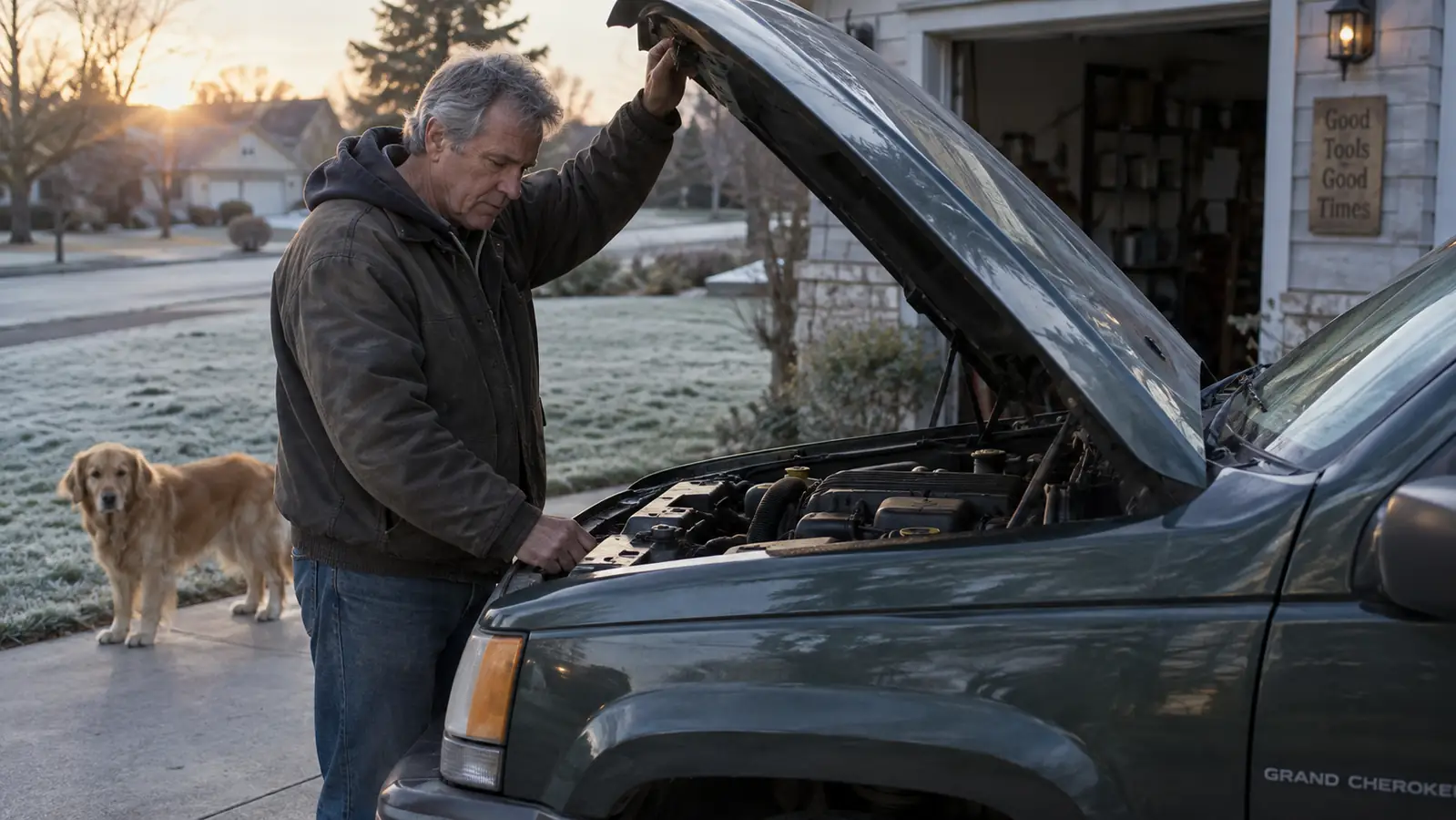
I drive a 2016 Toyota Highlander that just rolled 191,000 miles. When you spend most weekdays on a 70-mile stretch of US 65 between Springfield and points south, you learn to notice small sounds. You also learn that a dead battery never happens in your own driveway. It happens at the gas station in a town you do not live in, at 6:40 on a Tuesday morning, with mist coming off the field across the road. The NOCO Boost GB40 is the jump starter I put in the back of that Highlander after the second time a dead battery turned a short day into a long one.
Here is the honest part that most reviews seem to skip. The Boost GB40 is not something you will use every week. Mine sat in the cargo area for months before it needed to do anything. When it finally did, the detail that impressed me was not the thousand amp number printed on the box. It was how the smart clamps let me make a small mistake and still get a safe connection. Over a year later, that is the reason the unit still rides behind the back seat.
The Quick Verdict
The GB40 earned its spot in my cargo area, but it is a specific tool for a specific kind of driver, not a magic box that belongs in every trunk.
Amazon Check Today's Price →A jump starter that does its job without a second car
I bought the NOCO Boost GB40 after a dead battery left me waiting in a cold parking lot. Fourteen months later it has started my Highlander twice without drama. See today's price on Amazon and decide if it belongs in your trunk.
Amazon Check Today's Price on Amazon →What Nobody Tells You About Owning a Lithium Jump Starter
Most reviews for a piece of automotive gear are written in the first week, when the box still smells like new plastic and the owner is excited to have spent money on a tool. I have owned the NOCO Boost GB40 for about fourteen months, which is long enough for the novelty to wear off and for a few annoying truths to show themselves. The first truth is that you will use this thing far less than you expect. I made it through an entire Missouri summer, a fall, and most of a winter before the GB40 left its pouch to do an actual jump start. That is not a criticism, because the tool is not supposed to get used. It is insurance. But it means you should not buy one because you imagine yourself rescuing stranded strangers every weekend. You buy one for the single morning when the temperature is barely above freezing, your battery has decided it has had enough, and the parking lot is empty.
The second truth is that a lithium jump starter is a maintenance item. You cannot toss this in a door pocket in June and expect it to be fully ready in January. The Boost GB40 holds its charge a lot better than the cheap pack I bought years ago, but it still has a battery inside it, and batteries prefer to be checked. I charge mine at the start of each season. I also press the small status button every time I clean out the back, which is roughly every two weeks because I carry samples and catalogs for my sales route. On a hot August afternoon, I found the unit warm to the touch after the Highlander sat in a parking lot for three hours. It still worked fine, but I moved it out of direct sunlight and into the covered storage bin under the cargo floor. That kind of care is not hard. It just has to become a habit, and most owners will not make the habit.
The third truth is that the Boost GB40 will not replace the battery bank you already carry. It has a USB port, and I have used it to top off a phone while waiting for a tow truck, but that is not its best use. A dedicated power bank is smaller, lighter, and does not have to stay charged enough to start a vehicle. Do not buy the GB40 because you want one gadget for everything. Buy it because you want a jump starter that happens to include a light and a USB outlet.
How I Tested It on a Real Dead Battery
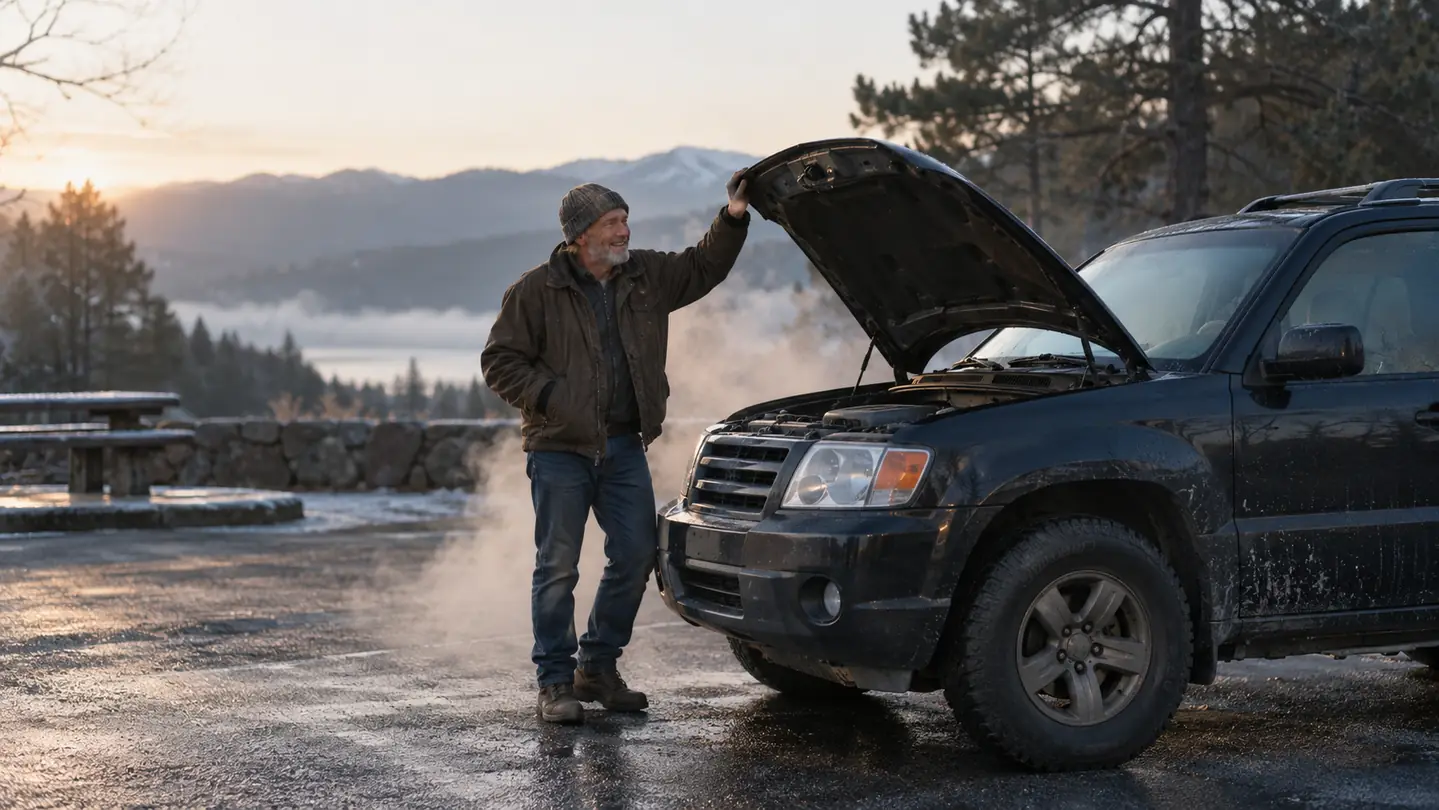
The test that mattered happened on a Tuesday in late February. I had stopped at a roadside rest area on US 65 to return a call from a customer. The sun had not been up long, and a light frost covered the grass. I left the headlights on while I sat in the driver's seat talking, which was careless. Twenty minutes later I hung up and pressed the Start button. The dashboard came to life, but the starter clicked once and then went silent. The wipers moved about two inches and stopped. Temperature read 34 degrees. No other vehicle was in the lot, and the next exit was seven miles down the road. I sat there for a second, annoyed at myself, then got out and walked to the back of the Highlander.
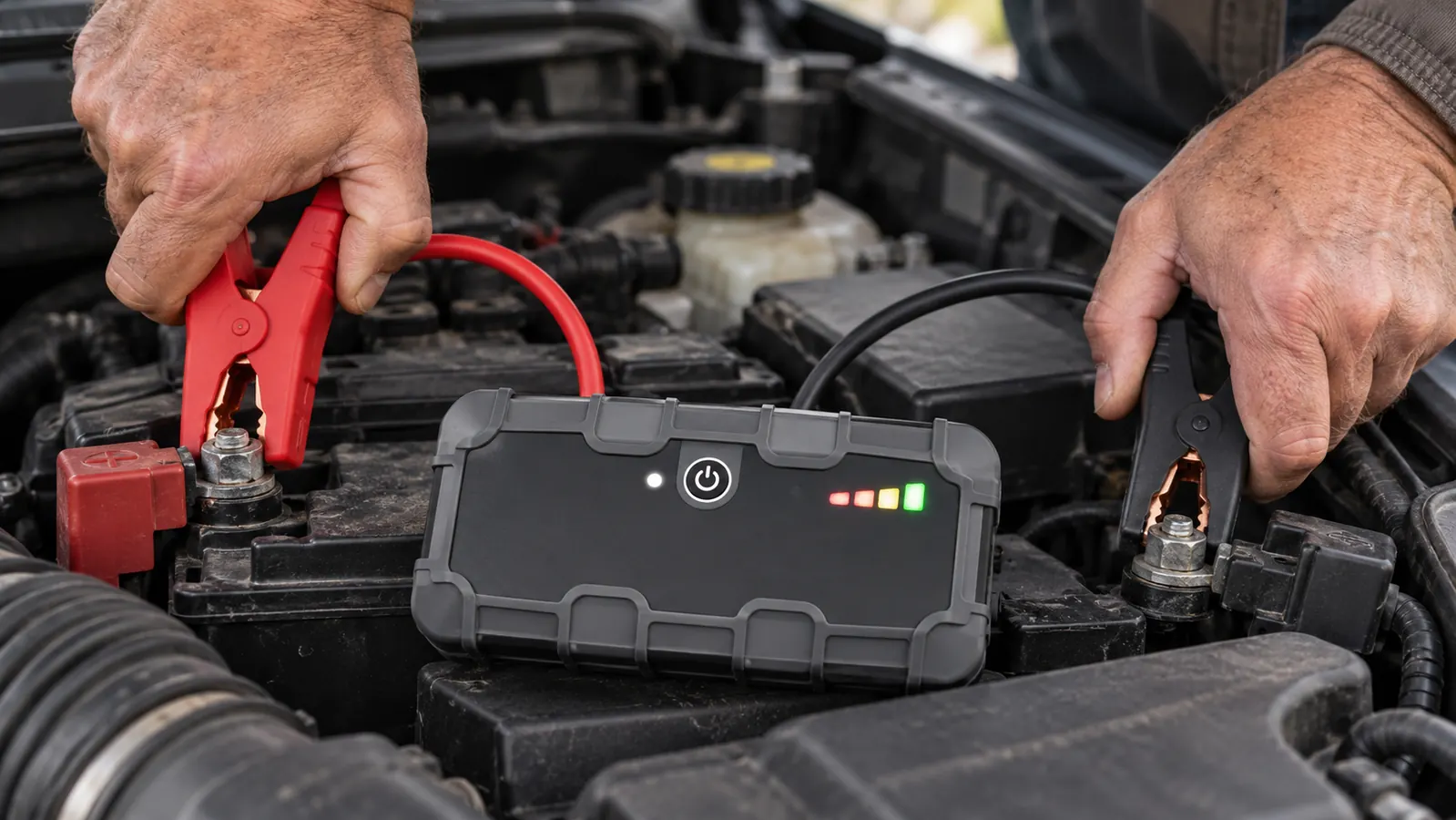
From the back I pulled out the NOCO Boost GB40, which lives in a zippered case with the clamp cable wrapped around it. I opened the hood, which after 191,000 miles still takes a firm pull on the release under the dash. The 3.5 liter V6 was cold enough that I could see my breath. I attached the red clamp to the positive terminal, which has a red plastic cover on most Toyotas. Then I found a bare metal bracket near the front of the engine for the black clamp. The instructions say not to connect the black clamp to the negative battery post if you can help it, because that is where sparks like to happen. The smart clamp flashed a green light, meaning it read the connection as safe. I let it sit for about ten seconds, got back in, pressed the brake and the Start button. The engine turned over with the same energy it has on a warm July morning. Total time from opening the hood to engine running was about one and a half minutes.
The second real use came three months later, after a long walk at a county park. I had left an interior light on, and the Highlander did not have enough power to start when I came back. The NOCO Boost GB40 was sitting in the same spot, still showing a full status when I checked it. It started the car with the same lack of drama. Two uses in fourteen months is not a spectacular record, but it is exactly what I want from a safety tool. I do not need it to be spectacular. I need it to be there, charged, and able to do its job when nothing else is around.
Two starts in fourteen months. Zero tow trucks. That is what a roadside rescue looks like when you never need one.
Where the GB40 Earns Its Place
I would rather own the Boost GB40 and use it twice than own cables and need a person to use them with. My route has long gaps between towns, and a lot of those gaps do not have a gas station with a mechanic on duty. If my battery dies out there, plain cables are only useful if another driver stops and is willing to put their vehicle close to mine. That can happen, but it can also take forty minutes, during which you stand on the shoulder and wonder if the next car will even slow down. With the Boost GB40, the only person I need is me. That is the whole sales pitch, and it is accurate.
It is also forgiving of someone who does not jump vehicles often. The supplied clamps are reverse polarity protected, which sounds like a marketing phrase until you make a mistake. I attached the black clamp to the wrong spot during a practice run, and instead of the loud pop and burned smell you get from an ordinary set of cables, the Boost GB40 simply refused to start the flow until I moved the clamp. I would trust this unit in the hands of a first time user without standing over their shoulder. The instructions printed on the back of the unit do not leave much room for confusion.
Where the GB40 Falls Short
Now for the other side. The GB40 is rated for gasoline engines up to roughly six liters, which covers almost every car, most SUVs, and plenty of trucks. It does not cover a diesel pickup with two batteries or a heavy motorhome. The package even warns about larger engines, but the warning is easy to miss next to all the bright marketing. If you have any doubt, measure your vehicle's engine size before you buy. Knowing the exact number ahead of time is better than finding out beside a disabled truck. The GB40 also cannot help if the battery has a dead cell inside it. I have seen that situation before, where a jump starter spins the engine twice and then gives up because the battery will not hold any charge. In that case, this unit does not fix your problem. It just tells you, politely, that you need a new battery and probably a tow.
There is also the simple matter of size. The Boost GB40 is not heavy in an unreasonable way, but it is larger than you would guess from the ads, and it needs to live somewhere you can reach quickly. I used to keep it in a cargo organizer behind the second row. When the Highlander was full of boxes for a sales event, I could not reach it without unloading everything. I moved it to a corner of the cargo area where nothing sits on top of it. If you are the kind of person who throws luggage into the back and lets it slide, the jump starter will end up buried. That is a practical objection that no spec sheet will tell you, and it matters more than the peak amp rating.
Should You Keep Plain Jumper Cables Around?
I still carry a set of ordinary cables in the Highlander, and I suspect I always will. Cables cost less, need no charging, and are the right tool when a second vehicle is available. If your driving is mostly in a city where another driver appears within minutes, cables might be all you need. The Boost GB40 becomes genuinely useful when there is no second vehicle, and that is not everyone's reality.
Ask yourself where you actually drive. I leave Springfield before sunrise, spend the day at customer sites that can be an hour from the nearest dealer, and come home late. On those roads, a portable jump starter shortens the worst part of a roadside breakdown from an hour of waiting to a couple of minutes of work. If that sounds like your week, you are the person who should look at the GB40. If your driving is a five-mile commute to an office with a parking garage and you have roadside assistance on your insurance, you will probably do fine with cables and a phone.
What I Liked
- Starts my Highlander in under two minutes with no second vehicle
- Spark-proof clamps forgive a wiring mistake
- One charge lasted seven months in storage and still worked
- LED light and USB port make it useful beyond jump starts
Where It Falls Short
- You have to remember to recharge it or it is dead weight
- Not enough for diesel trucks or batteries with internal damage
- Bigger and heavier than a pack of cables you already own
- Most months you will carry it for nothing
Who This Is For
The NOCO Boost GB40 is for the driver whose vehicle is old enough that parts start to need attention. My Highlander has 191,000 miles on it, and I replaced the factory battery about a year before I bought the Boost GB40. Even a fairly new battery can give up when the temperature drops or when a light is left on. I drive alone, which means there is no passenger to help when the starter clicks. For a driver like me, the GB40 is worth its space because it makes the car independent again. I do not have to wait for someone else to confirm that the red clamp goes on the positive post. I can simply handle it.
You should also consider how you feel about opening the hood. The GB40 is the kind of tool that rewards a little confidence. The clamps are big enough to grab, the indicator lights are plain, and the manual has pictures for people who have never touched a battery. If you are willing to spend ten minutes reading before you need it, you will be fine. If you would rather call a tow truck than lift a hood, this box will not change your mind.
Who Should Skip It
Skip it if you bought a new car within the last couple of years and have roadside assistance that you know how to use. Skip it if all of your driving happens inside city limits and a friend or a neighbor is always close. Skip it if you own a diesel truck or a vehicle with a gas engine larger than six liters, since the GB40 is not big enough for that job and you will be disappointed. Skip it if you cannot get into the habit of checking the charge twice a year, because an empty jump pack turns into an expensive paperweight at exactly the wrong moment. Those are honest reasons to pass. The GB40 does not have to be the right tool for everyone.
The Bottom Line
So is the NOCO Boost GB40 worth carrying instead of relying on jumper cables? For me, the answer is yes, and the reason has nothing to do with the thousand amp number in the product name. Jumper cables depend on a second vehicle. The Boost GB40 depends on nothing but its own charge. I have used it twice in fourteen months, once in a cold empty rest area and once in my own driveway. Both times it started the Highlander without drama. I still carry cables, I still check the charge, and I still move the unit out of the summer sun. It is not a toy and it is not a replacement for a new battery. But when the battery dies in the wrong place, this small box is the difference between being late and being stuck.
Still weighing a jump starter against a tow truck?
One dead battery was enough for me. The NOCO Boost GB40 has been in my Highlander ever since, and it has started the engine twice without help. Check today's price on Amazon and see whether it fits your own trunk.
Amazon Check Today's Price on Amazon →